
Project Facts
Coverage and Location
The Taninthayi Nature Reserve is situated in the Taninthayi Region, Dawei district, between the Dawei river and Myanmar-Thailand border, between latitudes 14° 20' 50" and 14° 57' 55" North and between longitudes 98° 5' 10" and 98° 31' 32" East. Administratively, its location is in the Yebyu and Dawei townships of Dawei district in the northern part of Taninthayi region in southern Myanmar. The northern border of the reserve adjoins Mon State and the southern border is with Myitta subtownship. The eastern border is sharing with Thailand border and the western part is along the closed path to Dawei river.
The area of Taininthayi Nature Reserve is approximately (420,060 ac) (1,699 square kilometers) comprising (208,240 ac) of Luwaing Reserved Forest and (211,837 ac) of Heinze-kaleinaung Reserved Forest. The length of TNR boundary is about 171 miles and a total of 175 boundary pillars were well demarcated around the nature reserve except the eastern boundary of Myanmar-Thailand border area.
Forest Cover
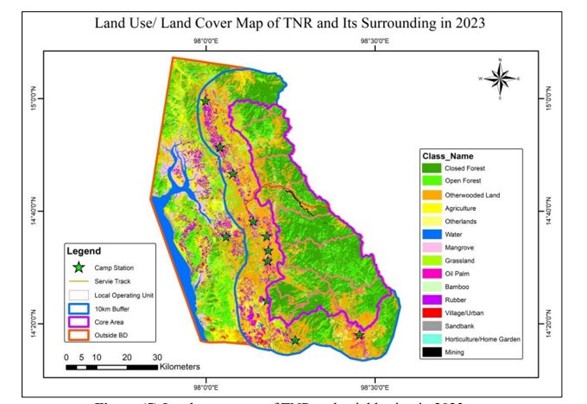
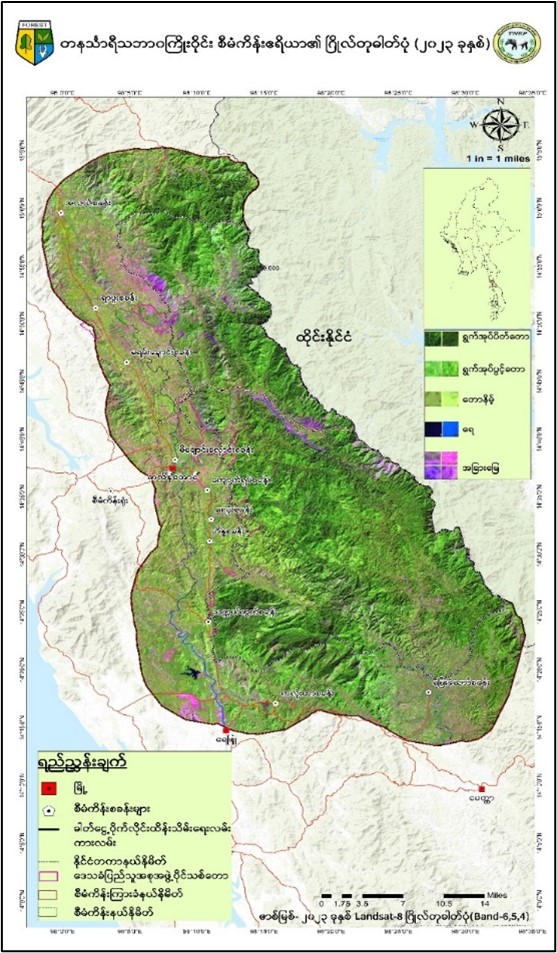
According to the Forest Resource Assessment (FRA-2020), the forest cover status of TNR is:
Closed Forest – 46.67 %
Open Forest - 29.76 %
 |  |
Management of TNR
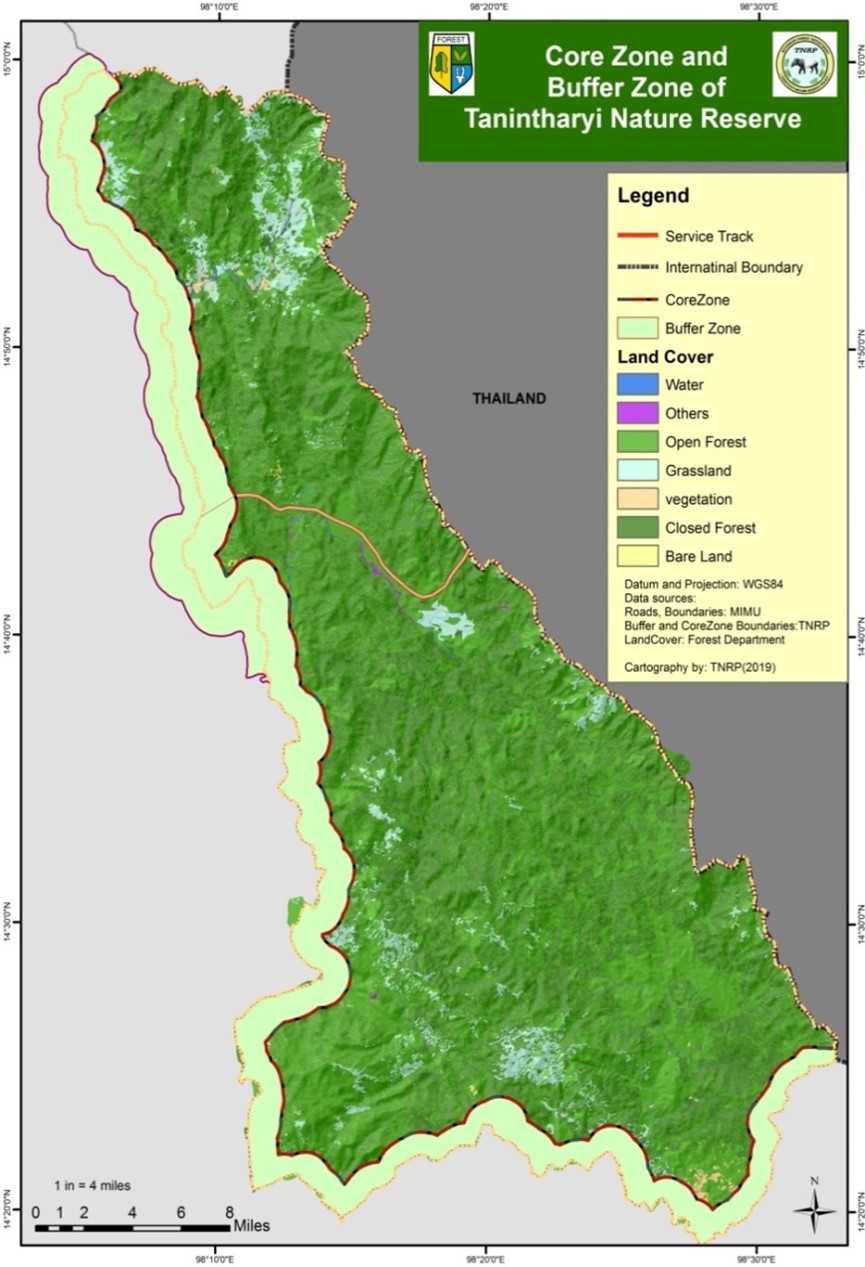
Taninthayi Nature Reserve (TNR) is divided into three main zones as core zone - 336912 acres (80% of area) , buffer zone – 79952 acres (19.03% of TNR) and Gas Pipeline conservation zone (Transportation Corridor ) – 3213 acres (0.77 % of TNR).
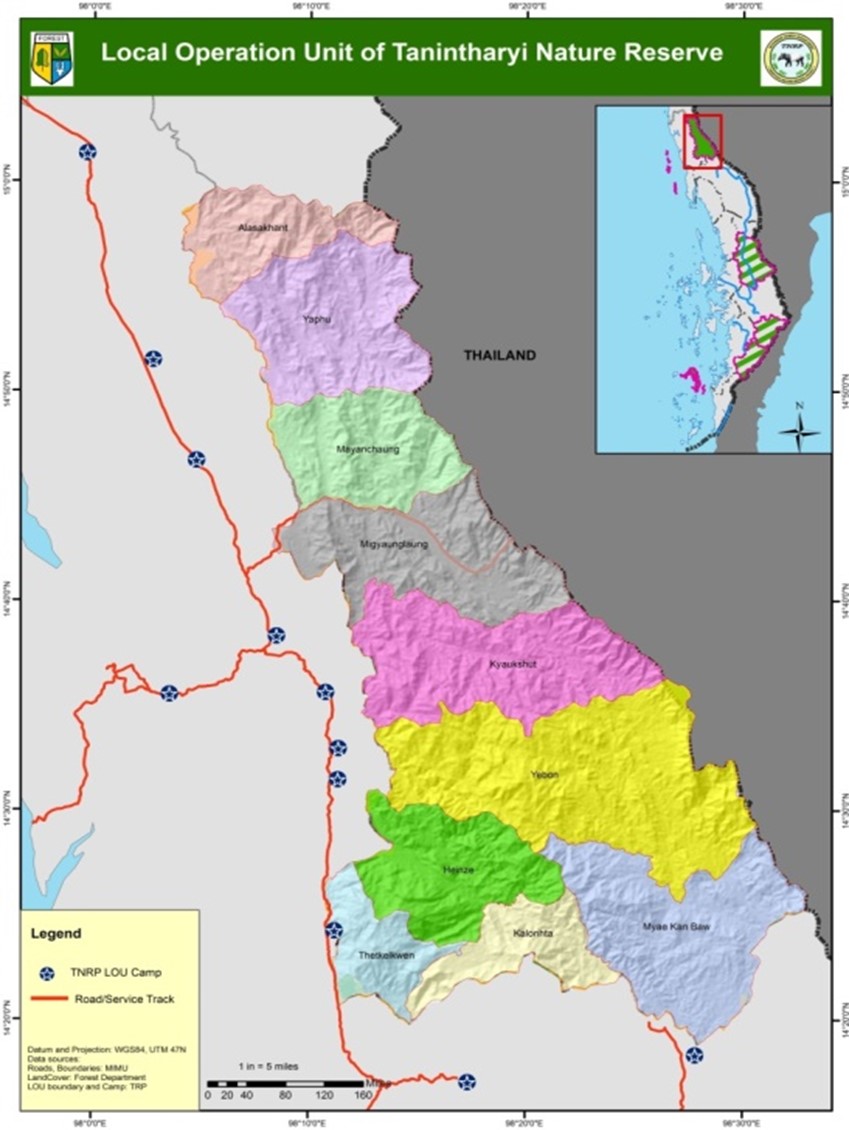
In order to be effective management of TNR, The project activities are being implemented by 10 Local Opetation Unit as Alasakhant, Yaphu, Mayanchaung, Migyaunglaung, Kyaukshat, Yebon, Heinze, Thetkekwen, Kalonhta and Myae Kan Baw.
 |  |
Biodiversity Richness of TNR
Flora
There are seven different forest types in TNR as follows (Smith, H.C. 1926);
- giant evergreen forest,
- sub evergreen forest,
- moist deciduous forest,
- riverine forest,
- dry deciduous forest,
- hill evergreen forest and
- tidal forest
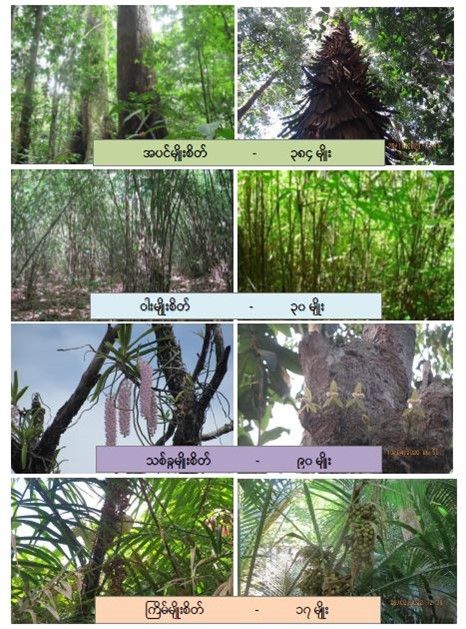
According to the surveys in Taninthayi Nature Reserve (TNR), the following flora species have been recorded;
- Tree species - 384 spp
- Bamboo species - 30 spp
- Rattan Species -17 spp
- Orchid Species - 90 spp
- Medicinal plant - 382 spp
Critically Endangered and Endangered tree species recorded in the TNR
No. | Local Common Name | Scientific Name | IUCN Threat status |
1 | Ka- ban | Anisoptera curtisii | Critically Endangered (CR) |
2 | Kaung-mu | Anisoptera scaphula | Critically Endangered (CR) |
3 | Kanyin-byan | Dipterocarpus grandiflorus | Critically Endangered (CR) |
4 | Kanyin-ni | Dipterocarpus turbinatus | Critically Endangered (CR) |
5 | Kyauk-thingan | Hopea helferi | Critically Endangered (CR) |
6 | Thin-gan-ma-ka-lay | Hopea sangal | Critically Endangered (CR) |
7 | Ka-dut-net | Parashorea stellate | Critically Endangered (CR) |
8 | Me- chaung - kyee | Shorea assamica | Critically Endangered (CR) |
9 | U-ban | Shorea farinosa | Critically Endangered (CR) |
10 | Kanyin | Dipterocarous dyeri | Critically Endangered (CR) |
11 | Kanyin pyan ywet kyi | Dipterocarpus kerrii | Critically Endangered (CR) |
12 | Ban Kaya | Shorea gratissima | Endangered (EN) |
13 | Kaban/ Ban | Anisoptera costata | Endangered (EN) |
14 | Kanyin phyu | Dipterocarpus alatus | Endangered (EN) |
15 | Kanyin ywet thay | Dipterocarpus costatus | Endangered (EN) |
16 | Yin-daik | Dalbergia cultrate | Endangered (EN) |
17 | Taung-bok | Diospyros | Endangered (EN) |
18 | Banthangyin | Shorea henryana | Endangered (EN) |
19 | Kanyin kyaung che | Vatica dyeri | Endangered (EN) |
Family- Dipterocarpaceae
Scientific Name - Shorea gratissima
Local Common Name - Ban Kaya
IUCN Threat status - Endangered (EN)
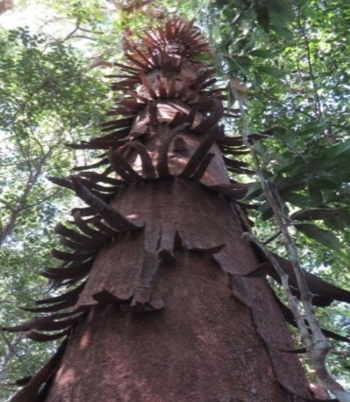
Family- Dipterocarpaceae
Scientific Name - Anisoptera scaphula
Local Common Name - Kaung-mu
IUCN Threat status - Critically Endangered (CR)
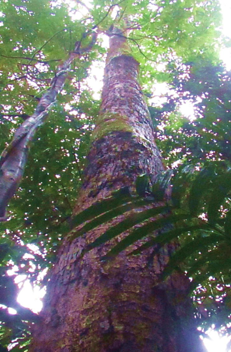
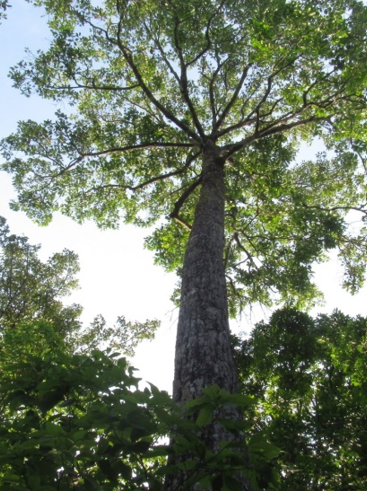
Family- Dipterocarpaceae
Scientific Name - Anisoptera curtisii
Local Common Name - Ka ban
IUCN Threat status - Critically Endangered (CR)
Fauna
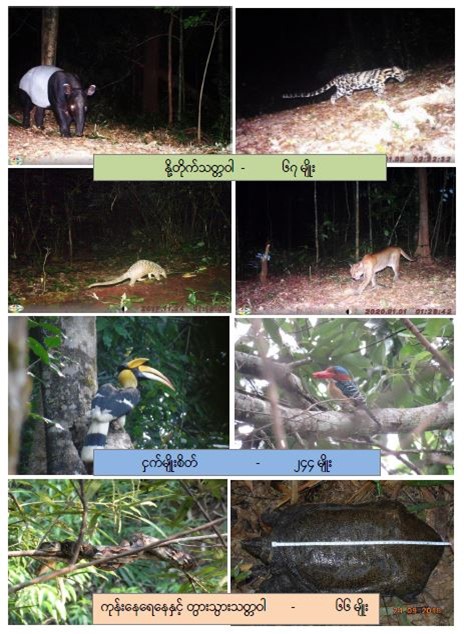
According the diverse habitats types in Taninthayi Nature Reserve, the following fauna species are able to be recorded as follows;
Mammal Species 68 spp
Bird Species 244 spp
Reptiles 66 spp
Threatened and near-threatened mammal species confirmed in the TNR
No. | English Common Name | Scientific Name | IUCN Threat status |
|---|---|---|---|
1 | Sunda Pangolin | Manis javanica | Critically Endangered (CR) |
2 | Indochinese Tiger | Panthera tigris corbetti | Endangered (EN) |
3 | Asian Elephant | Elepha maximus | Endangered (EN) |
4 | Dhole | Cuon alpinus | Endangered (EN) |
5 | Sambar | Cervus unicolor | Vulnerable (VU) |
6 | Sun bear | Helarctos malayanus | Vulnerable (VU) |
7 | Northern Pig-tailed Macaque | Macaca leonine | Vulnerable (VU) |
8 | Stump-tailed Macaque | Macaca arctoides | Vulnerable (VU) |
9 | Asian Tapir | Tapirus indicus | Vulnerable (VU) |
10 | Asiatic Black Bear | Ursus thibetanus | Vulnerable (VU) |
11 | Clouded Leopard | Neofelis nebulosa | Vulnerable (VU) |
12 | Marbled Cat | Pardofelis marmorata | Vulnerable (VU) |
13 | Gaur | Bos frontalis | Vulnerable (VU) |
14 | Binturong | Arctictis binturong | Vulnerable (VU) |
15 | Asian Golden Cat | Catopuma temmimckii | Near Threatened (NT) |
16 | Chinese Serow | Capricornis milneedwardsi | Near Threatened (NT) |
17 | Large Indian Civet | Viverra zibetha | Near Threatened (NT) |
18 | Fea’s Muntjac | Muntiacus feae | Data Deficient (DD) |
Threatened and near-threatened bird species recorded in TNR
No. | English Common Name | Scientific Name | IUCN Threat status |
1 | Plain-Pouched Hornbill | Aceros subrelficollis | Vulnerable (VU) |
2 | Blue-Banded Kingfisher | Alcedo Euryzona | Vulnerable (VU) |
3 | Green Peafowl | Pavo muticus | Vulnerable (VU) |
4 | Blue-Rumped Parrot | Psittinus eyamurus | Near Threatened (NT) |
5 | Lagger Falcon | Polibierax insignis | Near Threatened (NT) |
6 | Green Broadbill | Calyptomena uiridis | Near Threatened (NT) |
7 | Black Magpie | Platysumurus leucopterus | Near Threatened (NT) |
8 | Buff-Vented Bulbul | Iole olivacea | Near Threatened (NT) |
9 | Ferrugimous Partridge | Arborophila charltonii | Near Threatened (NT) |
10 | Red Throated Barbet | Megalaima mystacophanos | Near Threatened (NT) |
11 | Great Hornbill | Buceros bicornis | Near Threatened (NT) |
12 | Brown Hornbill | Anorrhunus tickelli | Near Threatened (NT) |
13 | White Rumped Falcon | Polihierax insignis | Near Threatened (NT) |
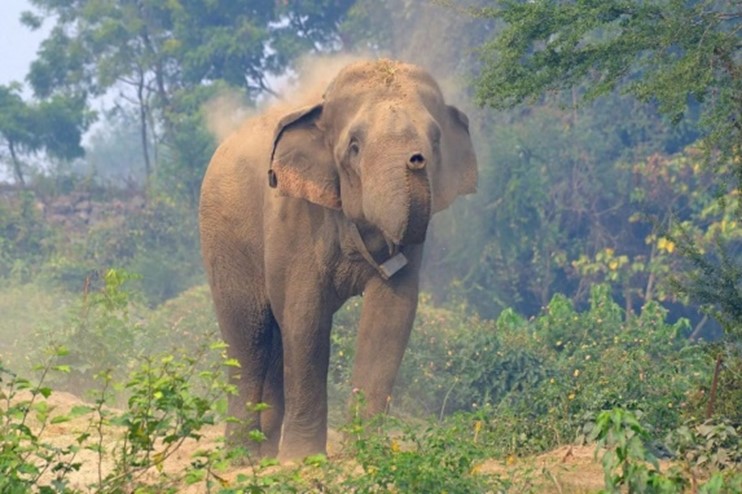
English Common Name - Asian Elephant
Scientific Name - Elephas maximus
IUCN Threat status - Endangered (EN)
Physical Description
Elephas maximus is one of the largest terrestrial organisms and is considered a megafauna species. Asian elephants have gray skin that is covered with hair. In adults, this hair is sparse, while calves have thicker brown hair. The body length ranges from 4 to 6 m. The trunk is a distinctive feature of the elephant family (Elephantidae). Males have tusks which are an elongation of the second upper incisors, while females lack tusks.
Behavior
Elephas maximus is a nomadic species that lives on the ground and moves around frequently. They can climb hills easily, but are not able to jump. Elephants are very good swimmers, and can submerge their body leaving only the trunk out of the water. Elephas maximus has matriarchal social organization. The females and offspring live together in a group, while the males live in smaller groups or alone. A clan consists of related females and their offspring with strong social bonds, and is usually between 5 and 20 individuals in size. Asian elephants are herbivores that eat many types of plant food including bamboo, sugarcane, crops, roots of trees, flowers, fruit, seeds, grains, and the bark of trees.
Habitat
Asian elephants live in a variety of habitats in the tropical region, including grasslands, tropical evergreen forests, moist deciduous forests, and scrub forests. They typically live in elevations from sea level to 3,000 meters, but elephants that live near the Himalaya Mountains sometimes move up higher than this range in hot weather.
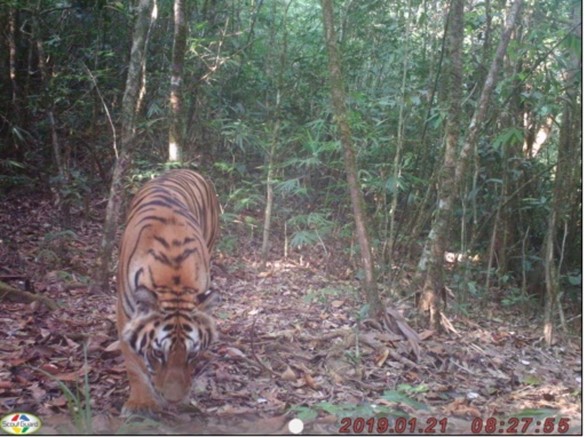
English Common Name -Indochinese Tiger
Scientific Name - Panthera tigris corbetti
IUCN Threat status - Endangered (EN)
Physical Description
Tigers have a reddish-orange coat with vertical black stripes along the flanks and shoulders that vary in size, length, and spacing. Head and body length 170-230 cm and the tail is 90-120 cm long. Tigers have short, thick necks, broad shoulders, and massive forelimbs, ideal for grappling with prey while holding on with long retractible claws and broad forepaws. A tiger’s tongue is covered with hard papillae, to scrape flesh off the bones of prey.
Behavior
Tigers are solitary, the only long-term relationship is between a mother and her offspring. Tigers are most active at night, when their wild ungulate prey are most active, although they can be active at any time of the day. Tigers are excellent swimmers and water doesn't usually act as a barrier to their movement. Tigers are carnivore that eats terrestrial vertebrates and animal Foods including birds, mammals, reptiles and fish.
Habitat
Tigers live in a wide variety of habitats, suggested by their distribution across a wide range of ecological conditions. They are known to occur in tropical lowland evergreen forest, monsoonal forest, dry thorn forest, scrub oak and birch woodlands, tall grass jungles, and mangrove swamps. Tigers have been found at elevations of 3,960 meters. In general, tigers require only some vegetative cover, a source of water, and sufficient prey.
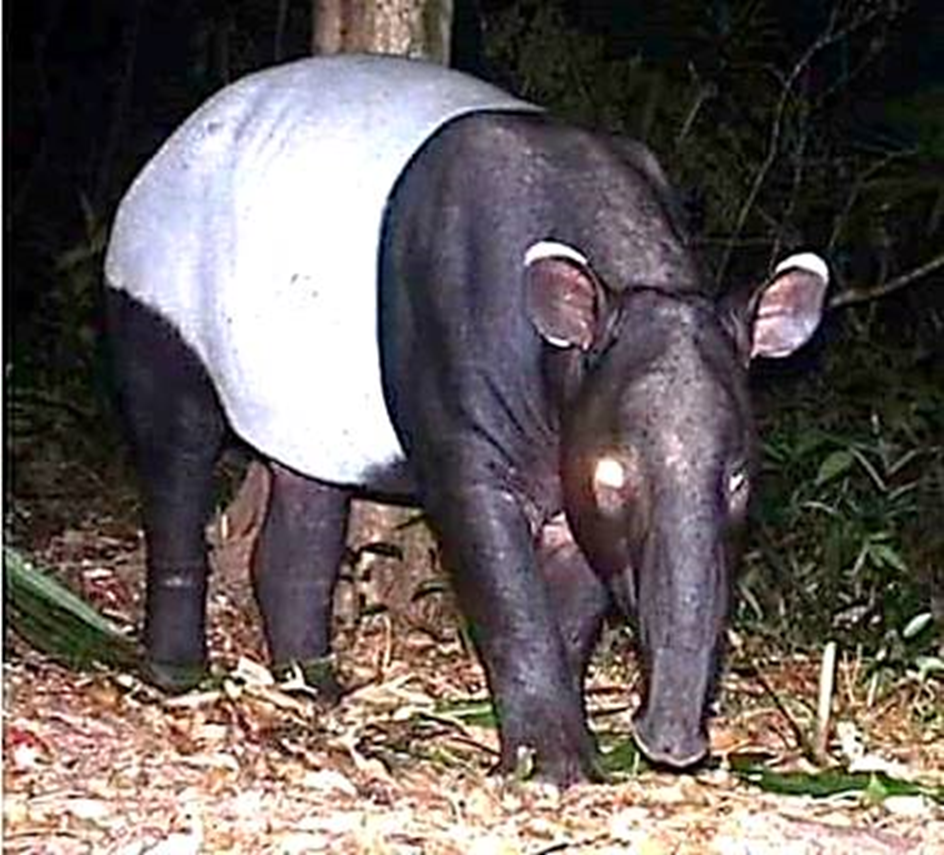
English Common Name - Asian Tapir (Malayan tapirs)
Scientific Name - Tapirus indicus
IUCN Threat status -Vulnerable (VU)
Physical Description
Malayan tapirs have large, stocky bodies with a prominent, prehensile proboscis formed by an extended nose and upper lip. Individuals range from 250 to 540 kg, with a length of 1.8 to 2.5 m and a height of 0.9 to 1.1 m. Females tend to be larger than males by about 25 to 100 kg. Adults have a dramatic color pattern, with a black front half of their body, white sides, and black hind legs. This pattern is often referred to as the "saddle" pattern because of its position and shape. White fur rims the ears. Newborn Malayan tapirs lack the adult coat pattern and have a coat with whitish stripes and spots which gradually fade by six months of age.
Behavior
Although generally considered solitary, nocturnal animals, Malayan tapirs are more tolerant of conspecifics and demonstrate crepuscular rather than completely nocturnal activity in undisturbed forests. They may form groups in times of food shortage. Malayan tapirs are herbivore(frugivores, folivores, and lignivores). They are selective browsers, selecting high quality food when available. The diet consists of leaves, buds, growing twigs, bark, herbs ,shrubs , fruits, club, grasses, tubers, and aquatic plants.
Habitat
Malayan tapirs are forest dwellers that inhabit tropical terrestrial habitats. They occur in rain forests, jungles, primary forests and secondary forests. Malayan tapirs are restricted to southern Vietnam, southern Cambodia, southern Myanmar (Burma), the Tak Province of Thailand, the Malay Peninsula, and Sumatra south of the Toba Highlands.
 |  |
Project Period
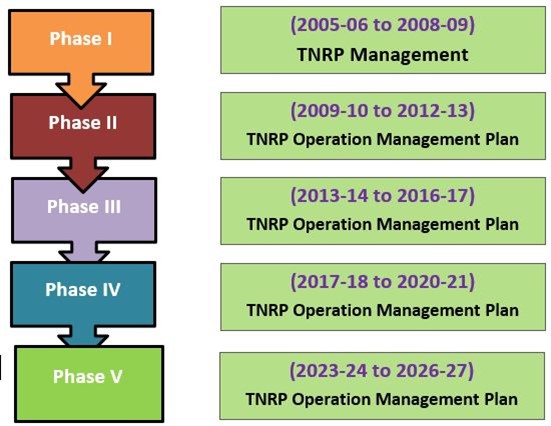
The project aims to be carried out for 30 years from 2005-06 to 2034-35, and the first phase (4) year project from (2005-06 to 2008-09) , the second phase (4) year plan (2009-10 to 2012-13) , the third phase (4) year project plan from (2013-14 to 2016-17) and the fourth phase (4) year project period from (2017-18 to 2020-21) has been successfully implemented . Now, the fifth phase (4) year project period is being implemented from (2023-2024 to 2026-2027).
 |
Project Fund
Taninthayi Nature Reserve Project is a unique public private partnership program was developed by the coordination of Forest Department and Myanmar Oil and Gas Enterprise (MOGE) developed an ongoing joint venture with three companies: PETRONAS, PTTET, and TOTAL. Three partner companies provide fund for the biodiversity conservation and socioeconomic development activities in Taninthayi Nature Reserve.
Budget planning is linked directly with the Management Actions and Activities, and the framework is consistent across the Conceptual Model, the Management Actions, Logical Framework, and the Budget. Three partner companies, MGTC, TPC and ATL provide 450,000 US $ annually for the implementation of biodiversity conservation and livelihood development activities according to Operational Management Plan.
 |  |
 |
Management Facilities and Staff
Taninthayi Nature Reserve is being managed with the cooperation of 33 government staffs from forest department and 48 local staff assigned for the local ethnic groups assigned for the implementation of biodiversity conservation and livelihood development.
 |